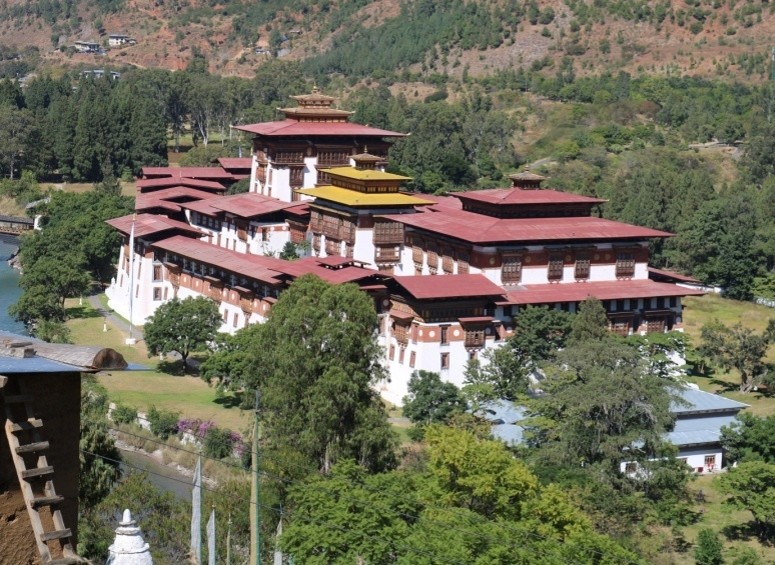
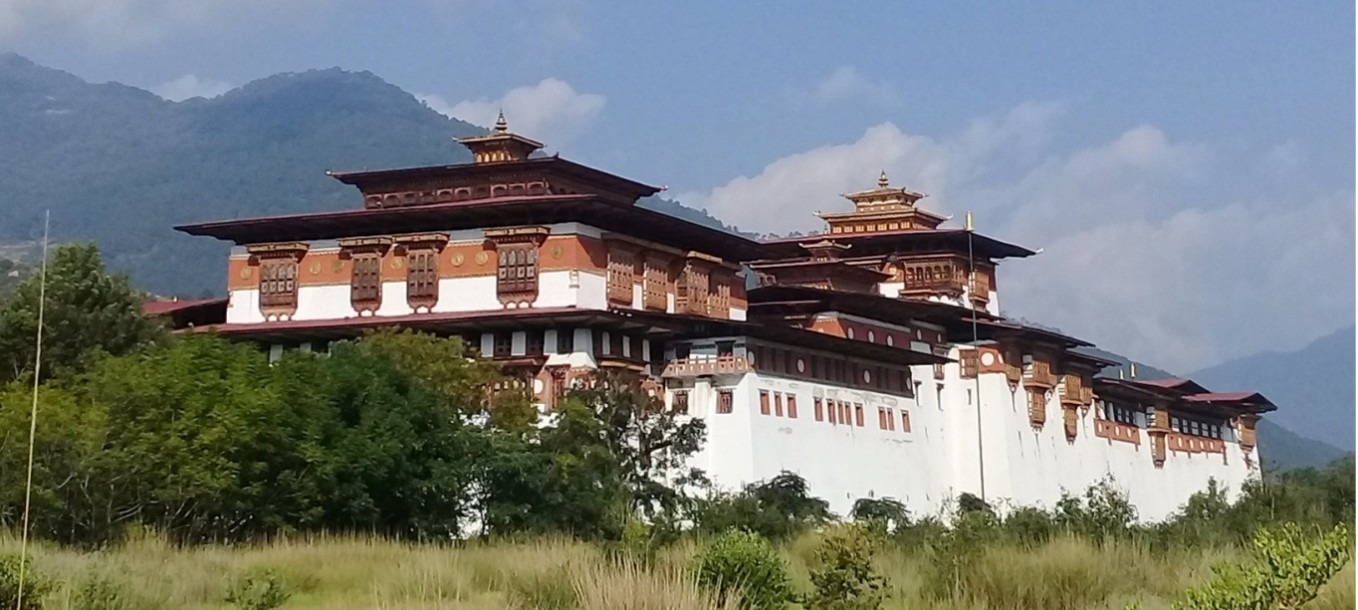
| Name: | Punakha Dzong |
|---|---|
| Identity: | Dzong |
| Level: | Registered Heritage Building |
| Category: | Heritage Building |
| Founder: | Zhabdung Ngawang Namgyal |
| Constructed(Year|Century): | 1637 | 17 |
| No. of Floor | 4floor |
| Main Wall | stone |
| Location: | Chhubu, Punakha |
| Current Use: | Original |
| Ownership: | Government |
| Coodinates: | 27°34'55.74"N, 89°51'46.96"E |
1. Brief History, Oral and written History In the 8th century, Guru Rinpoche has prophesied that a young man named Namgyal would come to a mountain that appeared like a sleeping elephant and build a dzong upon the elephant's trunk. As per the prophecy, Zhabdrung Ngawang Namgyal built the dzong with the help of a mystical carpenter named Balip with the vision to unify and rule the state with flourishment of Buddhism. The design of the dzong was based on the design of a monastery in Ralung. The mystical carpenter Balip was taken to the monastery in his dream when Zhabdrung Ngawang Namgyal made him slept for three nights in his presence enabling him to conceive the design and plans for the dzong without putting it on paper. On the basis of the dream the construction of the dzong was started in 1637 and completed in 1638. Further, when Zhabdrung Ngawang Namgyal reached at the current site and stayed there for few days thinking to built a dzong the deity Goenpo Drakpa and the mermaid of the chuzom offered their vow to Zhabdrung on providing the timber to built the dzong. Accordingly, a tree appeared from the middle from sand which is believed to suffice the timber requirement for the construction of the dzong. Furthermore, the sister of deity Goenpo Drakpa and a local deity also offered their vows on providing the required stones for the construction of the dzong. Accordingly, the stones were sourced from a placed called Zing-Chen by the deities and the stones were carried by the flash flood to the current location of the dzong. An oral history also states that the construction of the dzong was carried out by the volunteers from the district during the day time and the during the night, the deities would continue on building the dzong. After the completion of the dzong in the year 1638, Zhabdrung Ngawang Namgyal set up a monastic institution in the dzong and named the dzong as Pungthang Dewachenpoi Phodrang which translates to the 'place of great happiness or bliss'.